
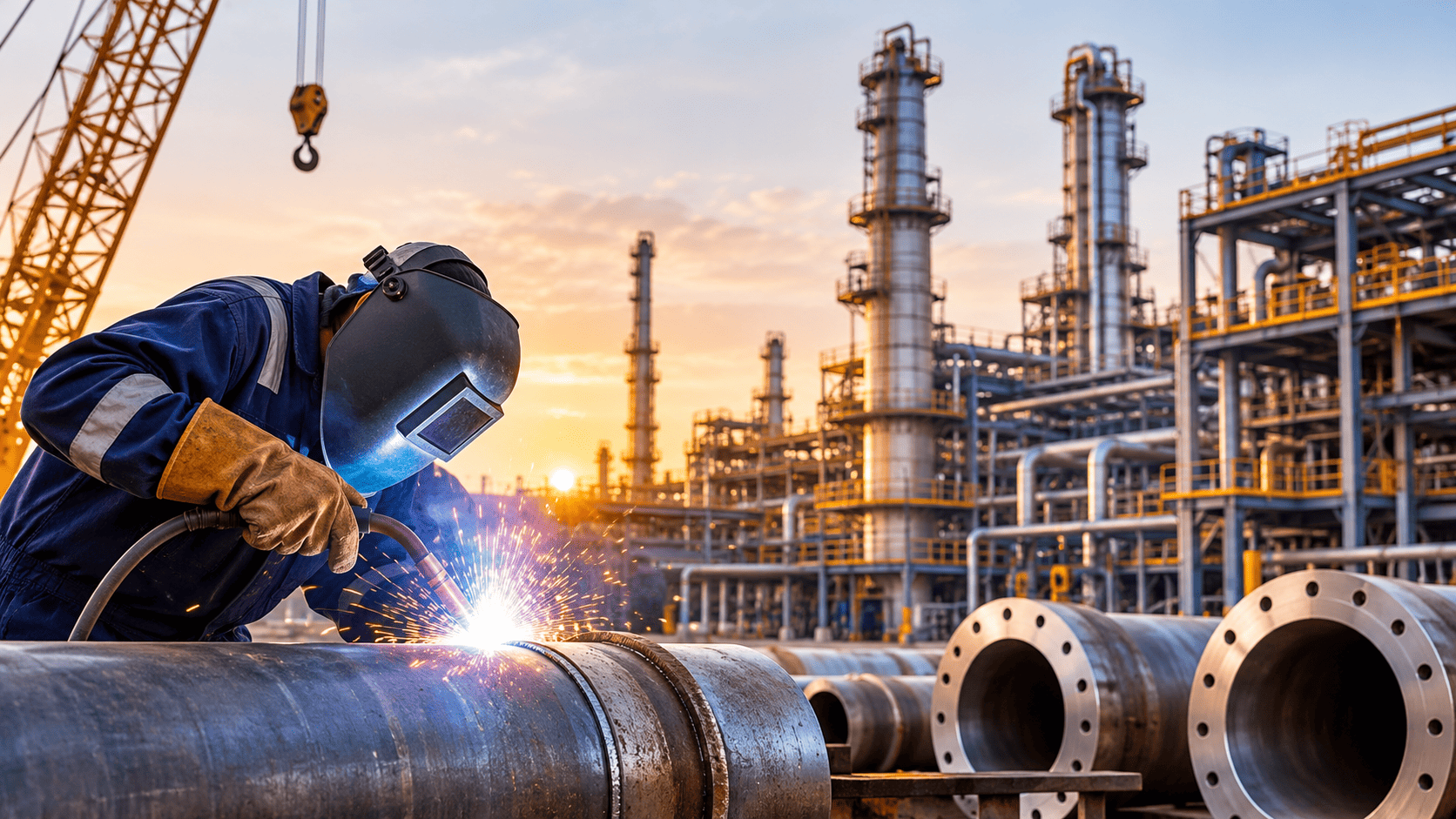
Oil and gas equipment fabrication is the process of cutting, forming, welding, and assembling raw steel and alloy materials into the vessels, skids, tanks, piping, and structures that drilling, processing, and transport operations depend on. Every piece must withstand high pressure, extreme temperatures, and corrosive fluids, so the work follows strict engineering codes and inspection routines from the first cut to the final test.
This guide explains how the process works, which products it covers, where the equipment is used, and what to look for in a fabrication partner.
Fabrication is the shop-based stage that turns engineering drawings into finished, testable equipment. Plate, pipe, structural sections, and fittings arrive as raw stock and leave as pressure-rated assemblies ready for installation in the field.
The oil and gas sector holds fabricators to a higher standard than most industries. Equipment handles flammable hydrocarbons, sour gas, high-pressure steam, and seawater, so a weak weld or a wrong material grade can lead to leaks, shutdowns, or safety incidents. Fabricators therefore work from approved designs, certified materials, and documented procedures, and they keep full traceability records for every component.
Fabrication sits between design and installation. Engineers define what is needed, the fabrication shop builds and tests it, and site crews install and commission it.
Most projects move through the same stages, though the detail varies with the equipment and the governing code.
Each stage produces documentation that forms part of the final data book handed over to the client.
Fabrication shops build a wide range of equipment, from single components to complete process packages.
Skid-mounted packages deserve special attention. Building and testing a unit in a controlled workshop shortens site work, reduces risk, and improves quality compared with assembling the same system outdoors.
Codes and standards are what make equipment safe and acceptable to operators. The most widely used include:
A sound quality program includes welding procedure specifications, welder qualification records, non-destructive testing, dimensional checks, pressure testing, and a final inspection with client or third-party witnesses. Completed work is delivered with a data book that records materials, weld maps, test results, and certificates.
Fabricated equipment appears at every stage of the industry.
Across all of these, the common requirement is equipment that performs reliably for years with minimal maintenance.
The UAE is one of the world’s major hydrocarbon producers, with continuing investment in upstream capacity, gas processing, refining, and petrochemicals. That investment keeps demand strong for oil and gas equipment fabrication UAE operators and EPC contractors can trust for quality, schedule, and compliance.
Local conditions shape how equipment is built:
A fabricator based in the region can also respond faster to design changes, site visits, and urgent repairs.
A good fabricator protects your schedule and your safety record. Check these points before you award a contract:
Bright Side Steel is a steel fabrication company that builds custom equipment and structures for the oil and gas sector. The team works from client drawings and specifications to deliver pressure-rated, corrosion-protected, and fully documented fabrication that meets project requirements.
As a provider of oil and gas equipment fabrication UAE clients can depend on, Bright Side Steel focuses on:
Whether you need a pressure vessel, a process skid, a tank, or structural steel, Bright Side Steel works with you from first enquiry to final delivery.
It is the workshop process of cutting, forming, welding, and assembling steel and alloy materials into equipment such as pressure vessels, tanks, skids, and piping. The work follows engineering codes and includes testing before the equipment ships to site.
Common products include pressure vessels, storage tanks, process skids, heat exchangers, piping spools, structural steel, and manifolds. Many are built as pre-assembled modules to speed up site installation.
The most common are the ASME Boiler and Pressure Vessel Code, ASME B31.3 for process piping, API standards for tanks and equipment, AWS D1.1 for structural welding, and ISO 9001 for quality management. The right set depends on the equipment and the client’s specification.
Carbon steel is the most common because it is strong and economical. Stainless steel, duplex stainless steel, and nickel alloys are chosen for corrosive, sour, or high-temperature service.
Simple skids or structures can take a few weeks, while large vessels and complex packages can take several months. Design approval, material delivery, testing, and coating all affect the schedule.
Non-destructive testing, such as radiography and ultrasonic inspection, finds hidden weld defects without damaging the equipment. It confirms that welds are sound before the equipment enters pressurized service.
Send your drawings, material specifications, applicable codes, quantities, and required delivery date. The more detail you provide, the faster and more accurate the quote will be.
Oil and gas equipment fabrication combines skilled welding, certified materials, strict standards, and rigorous testing to produce equipment that performs safely under demanding conditions. Knowing the processes, products, and quality checks involved helps you write better specifications and choose a partner with confidence.
Ready to discuss your project? Contact Bright Side Steel with your drawings and specifications to request a quotation.


