
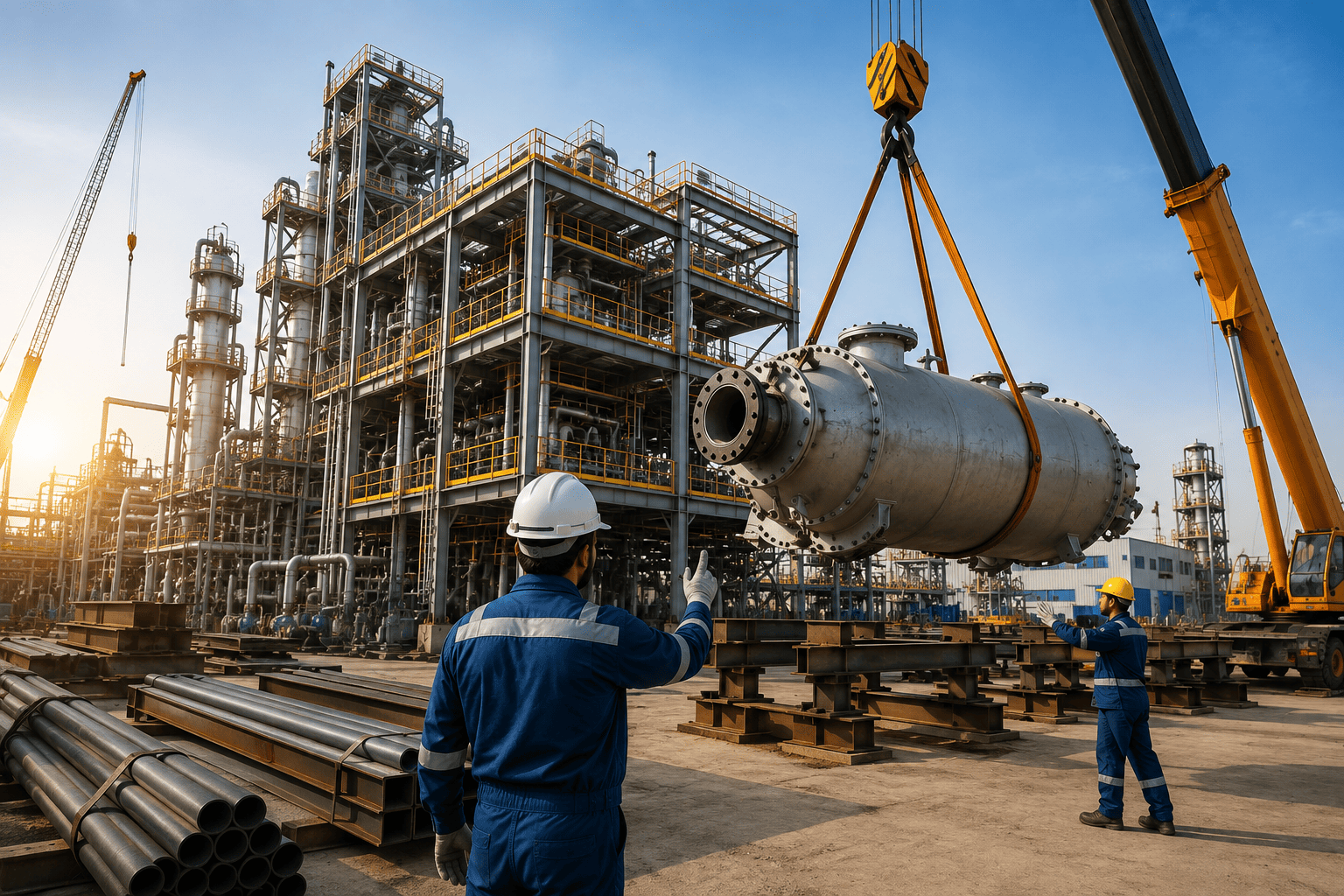
Choosing the right EPC fabrication contractor is one of the most important decisions you will make before breaking ground on any industrial project in Abu Dhabi. The right partner determines whether your project is delivered on time, within budget, and to the safety and quality standards demanded by sectors like oil and gas, petrochemicals, power, water treatment, and manufacturing. The wrong choice, on the other hand, can lead to costly delays, compliance issues, and rework that drains both money and momentum.
Abu Dhabi’s industrial landscape is booming, driven by expansion in energy infrastructure, downstream processing, and heavy manufacturing across zones like ICAD, KIZAD, and Ruwais. With so many contractors competing for business, owners and project managers need a clear framework for evaluating who can actually deliver. This guide walks you through everything you need to know to select a dependable, capable, and experienced partner for your next build.
Before diving into selection criteria, it helps to understand the scope of work. EPC stands for Engineering, Procurement, and Construction a single-point-of-responsibility model where one contractor handles the entire lifecycle of a project. When fabrication is added to that scope, the contractor is also responsible for manufacturing structural steel, piping spools, pressure vessels, skids, tanks, and other custom equipment needed for the facility.
This combined responsibility means the contractor’s in-house engineering team designs the components, their procurement team sources compliant materials, and their fabrication shop builds the equipment before it moves to site for installation and commissioning. Because everything flows through one organization, communication gaps between designers, suppliers, and builders shrink dramatically provided the contractor is genuinely equipped to handle all three disciplines rather than subcontracting critical work without proper oversight.
Industrial projects in Abu Dhabi operate under some of the region’s strictest regulatory and safety frameworks, shaped by entities like ADNOC, the Environment Agency Abu Dhabi, and various municipal authorities. Add to that the harsh desert climate, high ambient temperatures, sand and dust exposure, and the corrosive coastal environment near facilities like Ruwais and Musaffah, and it becomes clear that generic fabrication experience isn’t enough. You need a contractor who understands local conditions, codes, and supply chains.
A capable EPC fabrication contractor brings more than welding and steel-cutting capability they bring engineering judgment, quality assurance systems, and a track record of navigating Abu Dhabi’s approval processes without derailing your schedule.
Not all fabrication work is equal. A contractor who has built storage tanks for a water treatment plant may not have the same competency in high-pressure piping for a refinery. Ask for a portfolio of completed projects that closely match your industry oil and gas, petrochemical, power generation, desalination, or general manufacturing. Request references and, where possible, visit a completed project or an active fabrication yard to see their workmanship firsthand.
Some companies market themselves as EPC contractors but outsource the bulk of their fabrication work to third parties. This adds layers of coordination, reduces quality control, and often increases costs. Look for a contractor with its own fabrication yard, equipped with cutting, welding, blasting, painting, and testing facilities. Ask about shop capacity, equipment age, and whether they can scale up production if your project timeline tightens.
Certifications are non-negotiable in industrial fabrication. Confirm the contractor holds relevant credentials such as ISO 9001 (quality management), ISO 14001 (environmental management), ISO 45001 (occupational health and safety), and welding qualifications aligned with ASME, API, or AWS codes, depending on your project type. For pressure equipment, verify ASME U-stamp or equivalent authorization. These certifications aren’t just paperwork they reflect whether a contractor has documented, repeatable processes that produce consistent quality.
A strong EPC partner should have an in-house engineering team capable of front-end engineering design (FEED), detailed engineering, 3D modeling, and stress analysis. This matters because design decisions made early on directly affect fabrication feasibility, material costs, and schedule. If engineering is weak or entirely outsourced, expect more design changes during fabrication and more cost overruns.
Abu Dhabi projects must comply with a web of local and federal regulations covering safety, environmental impact, and construction permitting. A contractor experienced in the emirate will already understand how to navigate approvals from bodies like the Department of Municipalities and Transport, civil defense authorities, and industry-specific regulators such as ADNOC for oil and gas projects. This local familiarity can shave weeks or months off your project timeline compared to a contractor unfamiliar with the region.
Industrial fabrication involves heavy machinery, hot work, and hazardous materials, all of which carry real safety risks. Ask for the contractor’s Total Recordable Incident Rate (TRIR) and Lost Time Injury Frequency Rate (LTIFR) over the past several years. A contractor with a strong HSE culture will have documented safety procedures, regular training programs, and a visible commitment to zero-incident targets. This isn’t just an ethical consideration; poor safety performance often correlates with poor project management overall.
Material delays are one of the most common causes of project slippage. A well-established EPC fabrication contractor UAE businesses can rely on will have strong, long-standing relationships with steel mills, valve manufacturers, and specialty material suppliers, both regionally and internationally. Ask how they manage long-lead items, whether they maintain buffer stock for critical materials, and how they’ve handled supply chain disruptions in the past.
Large industrial projects can span months or years. A contractor facing financial strain may cut corners, delay payments to sub-suppliers, or struggle to complete the project altogether. Request financial statements or bank references, and check whether the company has a stable history of completed contracts rather than a pattern of unfinished or disputed projects.
Ask how the contractor tracks progress, manages change orders, and communicates with clients. Mature contractors use structured project management tools, hold regular progress reviews, and provide transparent reporting on cost, schedule, and quality metrics. If a contractor can’t clearly explain their project controls process, that’s a warning sign.
Fabrication and construction don’t end at handover. Ask about warranty terms, availability of spare parts, and whether the contractor offers commissioning support, training for your operations staff, and maintenance services after the facility goes live.
While evaluating proposals, be alert to a few common warning signs:
When shortlisting contractors, structure your evaluation around direct questions such as:
A contractor who answers these questions clearly, with documentation to back up their claims, is far more likely to deliver a successful project than one who deflects or offers generic reassurances.
Many project owners in Abu Dhabi are moving toward single-source EPC fabrication contracts specifically because they reduce risk. When engineering, procurement, and fabrication sit under one roof, there’s a single point of accountability. Miscommunication between separate design firms, fabricators, and construction teams a common source of delay in split-contract models is largely eliminated.
This is particularly valuable for complex industrial facilities where design tolerances are tight and any misalignment between engineering intent and fabrication execution can cause expensive rework. A genuinely integrated EPC fabrication contractor can move a project from concept to commissioning with far fewer handoff errors.
Working with a contractor based in or near Abu Dhabi rather than one operating remotely from another emirate or country offers practical advantages. Site visits are easier to arrange, response times to issues are faster, and the contractor is more likely to have existing relationships with local authorities, suppliers, and labor resources. For industrial zones like ICAD, Mussafah, and KIZAD, contractors with an established local fabrication yard can also transport large fabricated modules more efficiently, reducing logistics costs and transit risk.
An EPC contractor manages engineering, procurement, and construction for a project. An EPC fabrication contractor additionally manufactures the structural steel, piping, vessels, and equipment needed for the project in-house, rather than relying entirely on third-party fabricators.
Timelines vary based on project complexity, but fabrication for medium-scale industrial equipment (tanks, skids, piping spools) commonly takes anywhere from a few weeks to several months, depending on design complexity, material lead times, and shop capacity.
Look for ISO 9001, ISO 14001, and ISO 45001 as baseline quality, environmental, and safety certifications. Depending on the project, ASME, API, or AWS welding and pressure-equipment certifications may also be required.
In-house fabrication reduces coordination overhead, improves quality control, and often shortens project timelines, since the contractor isn’t dependent on external shops with their own scheduling constraints.
Ask for their Total Recordable Incident Rate (TRIR) and Lost Time Injury Frequency Rate (LTIFR) over the past three years, along with documentation of their HSE management system and training programs.
Yes, in most cases. A local yard reduces transportation costs and risk for large fabricated modules, allows easier site visits and quality inspections, and often means the contractor has stronger relationships with regional suppliers and authorities.
Selecting the right partner for engineering, procurement, and fabrication work is a decision that can significantly shape the success of your entire industrial project. It is important to properly evaluate potential partners based on their experience, certifications, in-house capabilities, safety record, and financial stability rather than choosing a contractor based on price alone.
A well-qualified EPC fabrication contractor UAE industries can rely on should offer more than technical expertise. The right partner should have strong project management capabilities, local industry knowledge, a commitment to safety, and the ability to deliver projects on time and within budget. Bright Side Steel provides professional fabrication solutions backed by industry experience, quality standards, skilled professionals, and a strong focus on project requirements.
By applying the evaluation framework outlined above from checking certifications and fabrication yard capacity to reviewing HSE performance, technical expertise, and financial stability you can make a more informed decision when selecting an EPC fabrication partner. With the right contractor such as Bright Side Steel, industrial businesses can move confidently from project planning to safe, efficient, and reliable execution.


