
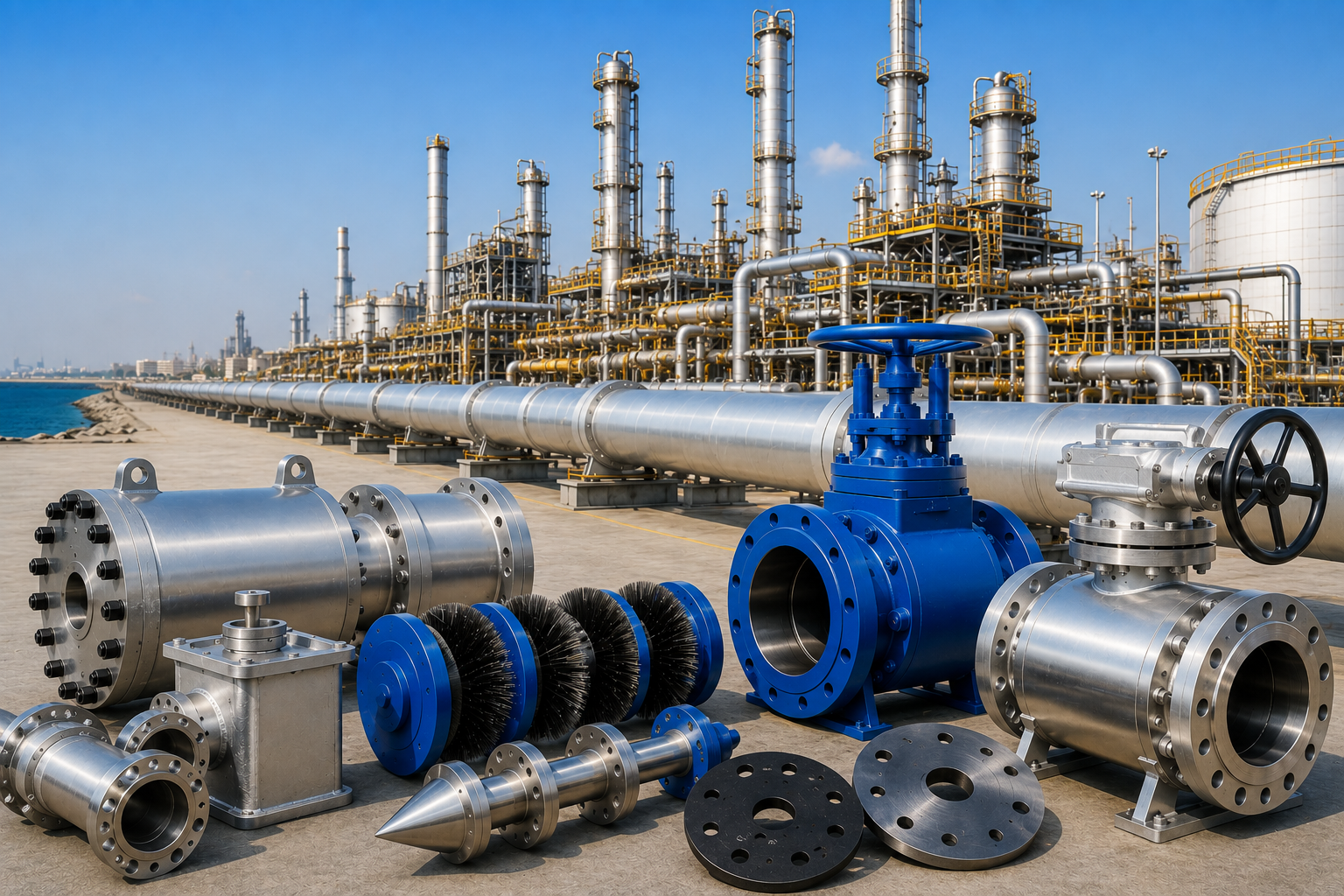
Choosing the oil and gas pipeline equipment in UAE is very important. It can make a difference in how a project works out. A project can run smoothly for a time or it can have a lot of problems. These problems can include shutting down a lot, safety issues and high costs to fix things. The energy sector in the UAE is growing fast in Abu Dhabi, Dubai and the Northern Emirates. Because of this the people in charge of projects are under a lot of pressure. They need to find equipment that meets the standards of the rest of the world. The equipment also needs to be able to handle the weather and different terrain of the UAE.
Here is everything you need to know about the choice of pipeline equipment, its significance and how to avoid serious errors in suppliers and their products selection.
Pipelines in the UAE operate under some of the harshest environmental conditions in the world extreme heat, high humidity near coastal facilities, and abrasive desert sand that accelerates wear on moving parts. Equipment that isn’t built for these conditions fails faster, leading to unplanned shutdowns, safety risks, and expensive emergency repairs.
Beyond durability, the right equipment directly affects:
The single most important consideration for extending the lifespan of pipeline equipment is choosing the right material. Carbon steel, stainless steel, and aluminum are some materials that can be considered, but it all depends on the nature of the fluid, pressure, and environment. In high saline conditions along the UAE coast, resistance to corrosion and stainless steel are necessary requirements for brush pigs, gauge plates, and magnet boxes.
Ask your supplier for material certifications and test reports before committing to an order. A reputable fabricator will provide mill certificates and third-party inspection reports without hesitation.
Any oil and gas pipeline equipment in UAE should meet recognized international standards, including:
Using a supplier that is familiar with the codes internationally and with the regulations of UAE saves a lot of time during the approval process.
Pipeline projects typically require several categories of equipment, and choosing correctly for each stage of the pipeline lifecycle matters:
A common mistake is treating pipeline equipment as one-size-fits-all. Pigging brushes, for example, come in multiple types: block brushes, hog bristle brushes, and pencil brushes, each suited to different pipe diameters and cleaning tasks. Selecting the wrong type can damage the pipeline interior or leave debris behind.
There’s a real advantage to sourcing oil and gas pipeline equipment in UAE from a supplier that fabricates locally rather than importing from overseas. Local fabrication typically means:
When evaluating a supplier, ask about their fabrication facility, quality control process, and previous project history within the UAE energy sector. Suppliers with a demonstrated track record on ADNOC-affiliated or major EPC contractor projects tend to have a stronger understanding of local compliance expectations.
Not every pipeline project fits a standard catalog. Diameter variations, unusual operating pressures, or unique installation environments often call for custom-engineered solutions. A good supplier should offer in-house engineering support to design equipment for your exact specifications rather than forcing your project to adapt to off-the-shelf parts.
Equipment that’s difficult to inspect or maintain increases long-term operational costs. Look for pipeline equipment designed with:
The cheapest option upfront is rarely the most cost-effective over the equipment’s lifespan. When comparing suppliers, factor in expected lifespan, maintenance frequency, warranty terms, and the availability of replacement parts. Quality oil and gas pipeline equipment in UAE projects often costs more initially but reduces downtime and replacement costs significantly over 5–10 years of operation.
Selecting the right oil and gas pipeline equipment in UAE isn’t just a procurement decision; it’s a long-term investment in the safety, efficiency, and reliability of your entire pipeline operation. By prioritizing material quality, regulatory compliance, supplier experience, and total cost of ownership over upfront price alone, project managers can avoid costly downtime and build pipeline infrastructure that performs reliably for years.
If you’re evaluating suppliers for your next project, look for one with proven local fabrication experience, transparent quality documentation, and the engineering support to handle custom requirements, not just a catalog of standard parts.
Material quality and corrosion resistance are typically the most critical factors, especially in the UAE’s harsh coastal and desert environments, followed closely by compliance with recognized international standards.
Local suppliers generally offer faster delivery, easier technical communication, and better after-sales support. Import may only make sense for highly specialized components unavailable locally.
Look for ISO 9001 certification at minimum, along with compliance to API and ASME standards, and the ability to provide material test certificates for every order.
This depends on usage frequency and pipeline conditions, but brushes and wear components typically need more frequent replacement than structural fittings like gauge plates or magnet boxes, which last longer with proper maintenance.


